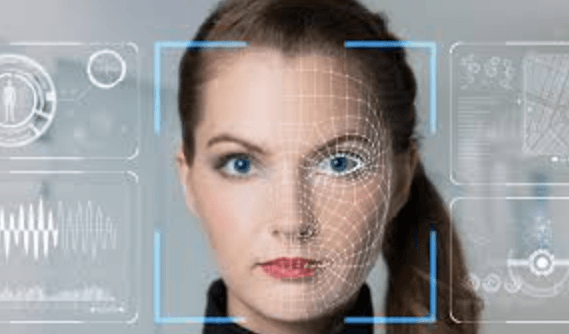
Image Recognition Technology
Image recognition technology analyzes visual data to identify objects, scenes, and activities. It relies on layered feature extraction, progressing from simple edges to complex patterns. Models learn from labeled data, optimize through iterative refinement, and produce probabilistic outputs. Real-world deployment introduces efficiency gains alongside privacy, bias, and governance concerns. The balance between innovation and accountability remains unsettled, inviting further evaluation of methods, standards, and safeguards that shape trustworthy adoption.
What Is Image Recognition Technology
Image recognition technology refers to computer systems that identify and categorize objects, scenes, and activities within digital images or video. The field analyzes data, extracting structured features to classify content while evaluating performance metrics. Its scope prompts an ethics debate, balancing utility with privacy and bias concerns. Algorithm transparency remains crucial for accountability, enabling scrutiny of decision processes and reproducibility in applied contexts.
How It Learns: From Pixels to Patterns
How does learning unfold in image recognition systems, transitioning from raw pixel data to robust pattern representations? Feature learning organizes local abstractions into hierarchical representations, progressively building invariants while preserving discriminative detail. Early layers emphasize edge detection, textures, and contours; intermediate stages fuse features into motifs; higher levels encode objects. This meticulous process yields compact, generalizable models with transparent learning dynamics and tunable capacity.
Real-World Uses and Impact
Real-world image recognition systems underpin a broad spectrum of applications by translating visual input into actionable decisions.
Deployments span healthcare, security, retail, manufacturing, and transportation, where efficiency and accuracy drive outcomes while operational costs decline.
Yet privacy concerns arise with data collection and surveillance potential, and algorithmic bias can skew results, undermining trust and fairness in automated assessments and decision processes.
Challenges: Privacy, Bias, and Accountability
The challenges of privacy, bias, and accountability in image recognition systems hinge on the collection, storage, and use of visual data, which heightens risks to individual privacy and consent.
This analysis quantifies privacy concerns, outlines governance models, and assesses accountability mechanisms.
It emphasizes bias mitigation, evaluation frameworks, and transparent reporting to enable responsible deployment without compromising innovation or individual rights.
Frequently Asked Questions
What Are Common Misclassifications in Image Recognition Systems?
Common misclassifications arise from dataset biases, leading to systematic errors where similar textures or contexts are conflated; mislabelings occur due to imperfect labeling, occlusions, and domain shifts, prompting cautious calibration and robust validation to mitigate biases.
How Do Models Fail With Adversarial Examples?
“Hit the nail on the head,” adversarial examples expose brittle decision boundaries that reduce adversarial robustness; models misclassify inputs crafted with imperceptible perturbations. This challenges model trustworthiness, revealing vulnerability and prompting rigorous evaluation, defense design, and transparency.
What Are AI Ethics Considerations for Deployment?
AI ethics considerations for deployment center on governance structures, transparency, and accountability; ethics governance ensures traceable decision processes, while bias mitigation reduces disparate impacts, data misuse, and unjust outcomes, enabling a freer, responsible exploration of AI capabilities.
Can Image Recognition Systems Understand Context Beyond Pixels?
Yes, limited concept awareness enables partial interpretation beyond pixels, while scene semantics remain constrained by training data, architectures, and labeling granularity; systems infer context probabilistically, not truly understanding, requiring human oversight for robust, freedom-respecting deployment.
See also: Identity Verification Technologies
How Is Model Performance Measured in Practice?
Model performance is measured through rigorous model evaluation, employing metrics like accuracy, precision, recall, F1, and AUC, while analyzing deployment challenges such as latency, scalability, data drift, and resource constraints in real-world environments.
Conclusion
Image recognition technology, viewed through a disciplined lens, reveals a field advancing from numerical pixels to semantic judgment. Yet as if shadowed by a cautious oracle, it carries privacy, bias, and governance concerns that demand rigorous evaluation and transparent accountability. The architecture’s precision must be matched by ethical scrutiny, ensuring models generalize beyond datasets. In this measured balance—technique paired with responsibility—the discipline moves from mere detection to trustworthy interpretation, akin to a cautious, well-lit unveiling of hidden patterns.